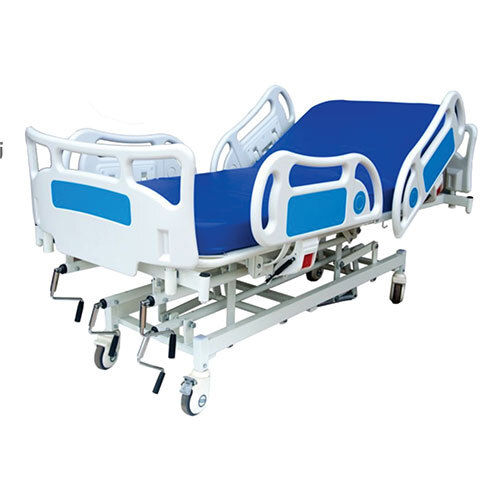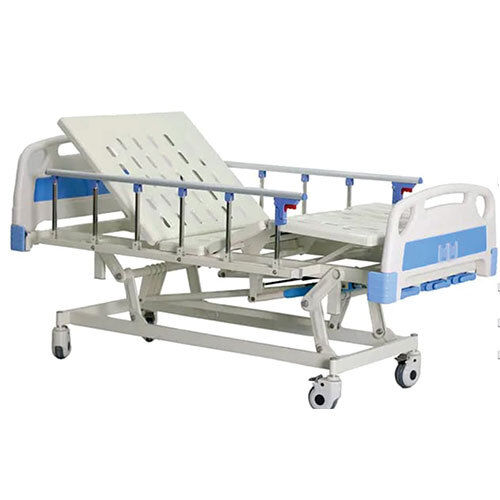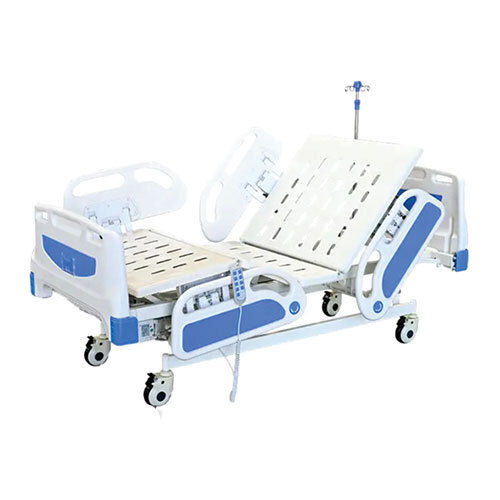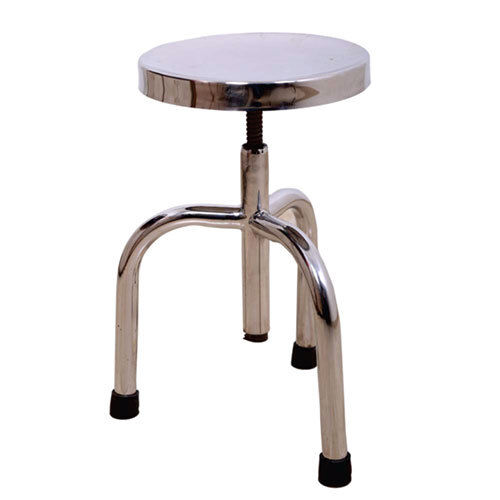

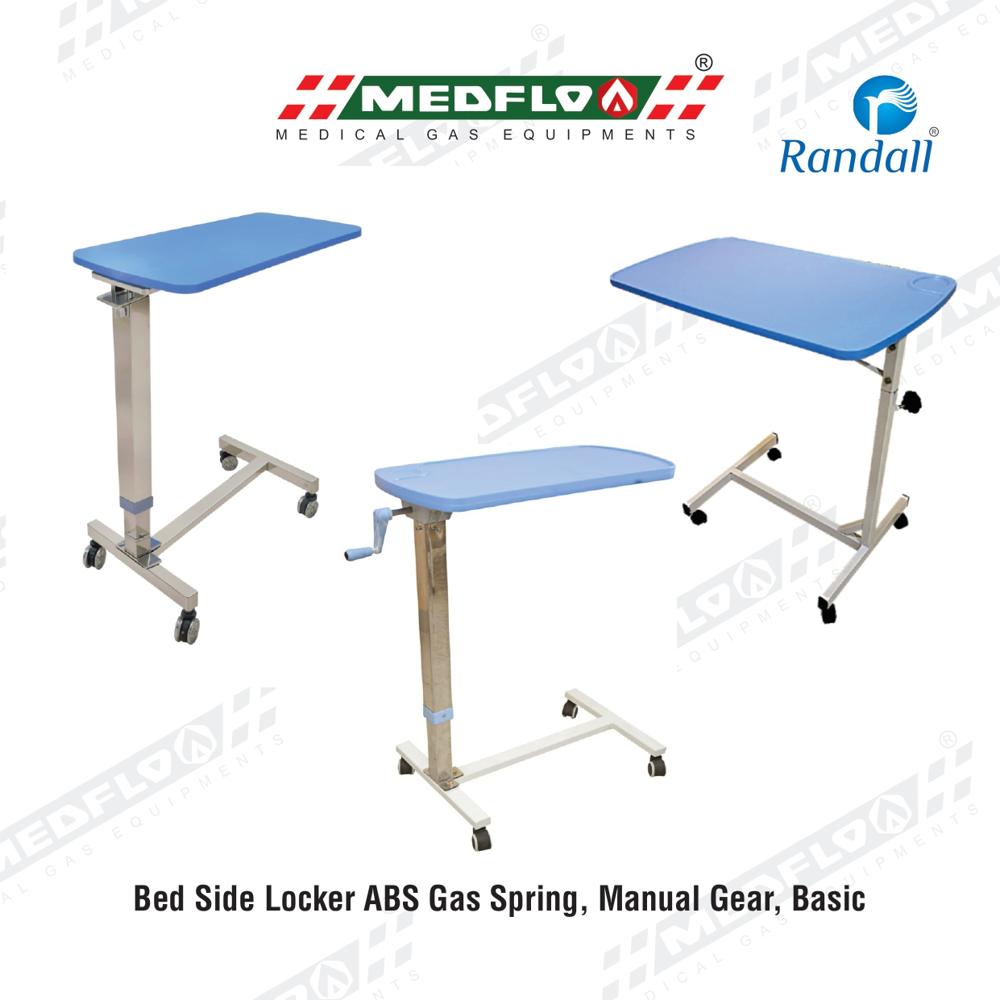
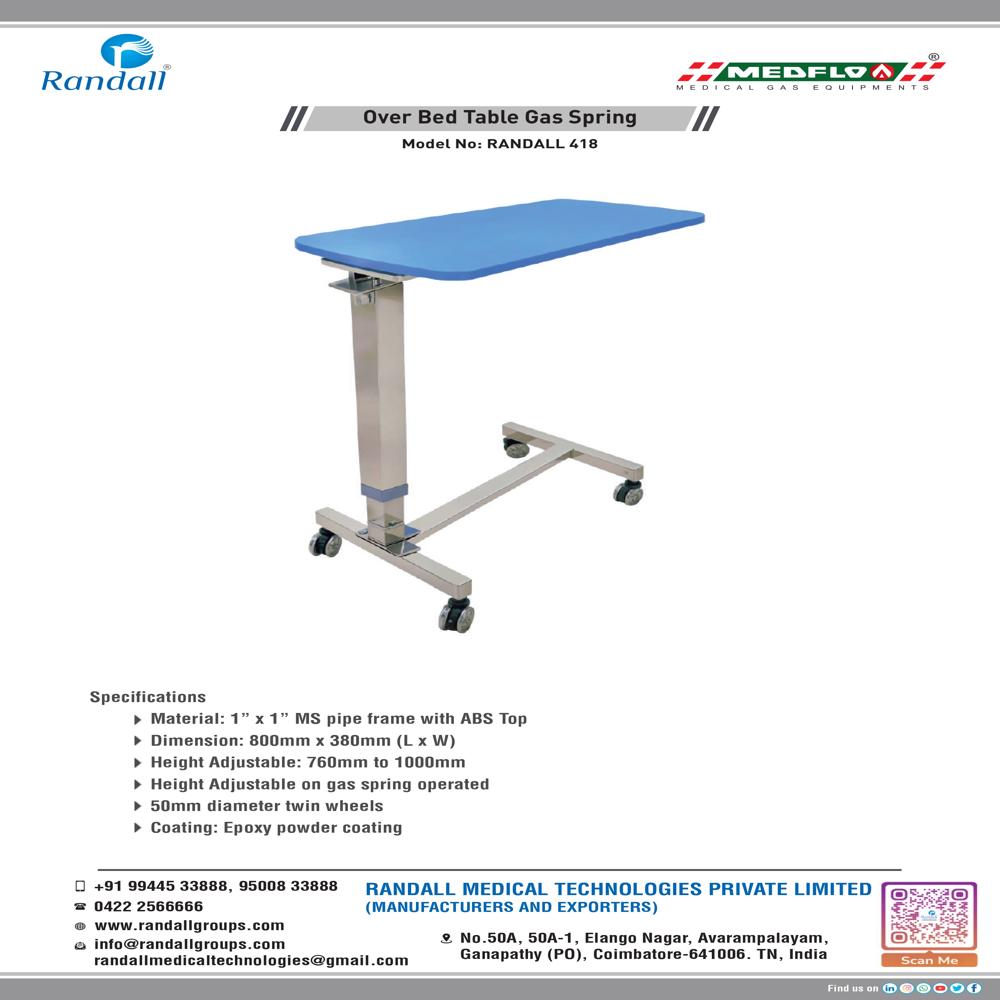
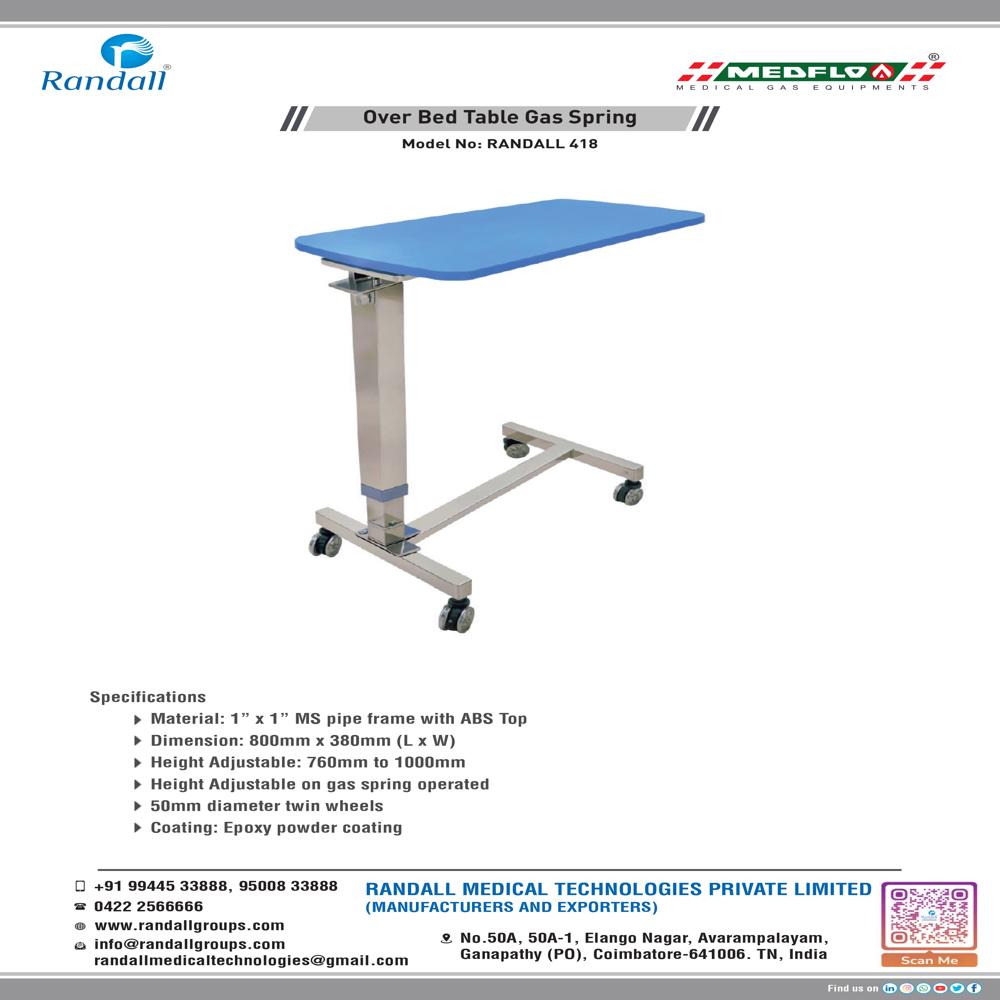
A hydraulic over-bed table is a versatile piece of medical or home-care equipment that provides a stable, adjustable surface for patients or individuals in bed. It's commonly used in hospitals, care facilities, and home environments. Here's a breakdown of its features and how it works:
Hydraulic Height Adjustment:
Uses a gas spring or hydraulic lift mechanism.
Easily adjusts height by pressing a lever or handle (no need to manually lift).
Typical height range: 28" to 45" (71114 cm).
Mobile Base:
Mounted on caster wheels for easy maneuvering.
Often U- or C-shaped to slide under beds or recliners.
Tilt or Non-Tilt Surface:
Some models have a tilting tabletop, ideal for reading or writing.
Non-tilt versions are more stable for meals or laptops.
Tabletop Surface:
Typically made of laminated wood or ABS plastic.
Smooth, easy-to-clean, and durable.
Weight Capacity:
Most support 2550 lbs (1123 kg), depending on design.
Safety & Stability:
Locking casters to keep it stationary when needed.
Some models include edge guards to prevent items from sliding off.

Price:
GST : 33AAKCR3583Q1ZN


|